
Winter Blossom
Just as all the Festive Christmas decorations reach their close on Twelfth Night, my attention always turns to the garden. I have loved my home being decked with Christmas tree off cuts, Holly, Choisya, Osmanthus, Arbutus and more. This year I took a moment to make Christmas decorations out of deeply coloured Cornus alba stems. I had multi stemmed hearts and wreaths decorating simple rough white plaster walls… it made my heart sing all Christmas. I'd rather thought that that these decorations could endure through until spring, but my lovely husband did a tidy up while I was out walking the dog, and they sadly were used to light the stove tonight! Nevermind, I will make them bigger and better next time, now that I have perfected the art!
This year as the weather plummets to -3° and the faint scattering of snow is crisp over iron hard ground, I am stunned - as I am every year - by nature's resilience and the beautiful blossoms that are emerging all around us.
My parents are the best gardeners I know, and their garden is totally stunning all year round. Of course, we all dream of this but the reality is it takes hours and hours of hard work and in my parents’ case, even though they're hearty octogenarians, never a day will pass without them spending an hour or two in the garden. Today my mother made my day by sharing a picture of the flowers that she had picked from her garden, see below.
They have beautiful Narcissi, Viburnum bodnantense Dawn, Hebe, Lonicera fragrantissima, and more Hellebores than you can shake a stick at!
I know that they also have in her garden many more winter shrubs, perhaps not yet in flower, including Daphne's, Hammamelis, and the small tree, winter flowering cherry. What is so clever about their garden are the layers of plants… nestled under the shrubs are blankets of winter flowering Cyclamen, self-seeded Violas, Snowdrops forming white carpets and cheeky yellow aconites heralding spring.
Of course, winter plants are essential pollinators, offering lifesaving nectar and pollen for hardy pollinators like queen bumblebees, honeybees, moths and hoverflies during the lean months, ensuring these insects survive to pollinate spring blooms. Have you also noticed that midwinter blooms often smell much more intense? There are many reasons for this, clearly the need to attract pollinators is essential but it is also thought that the still air of winter retains the fragrance more keenly. I’m sure I am not alone in finding nature completely awesome.
May your January garden be full of scented blossom.
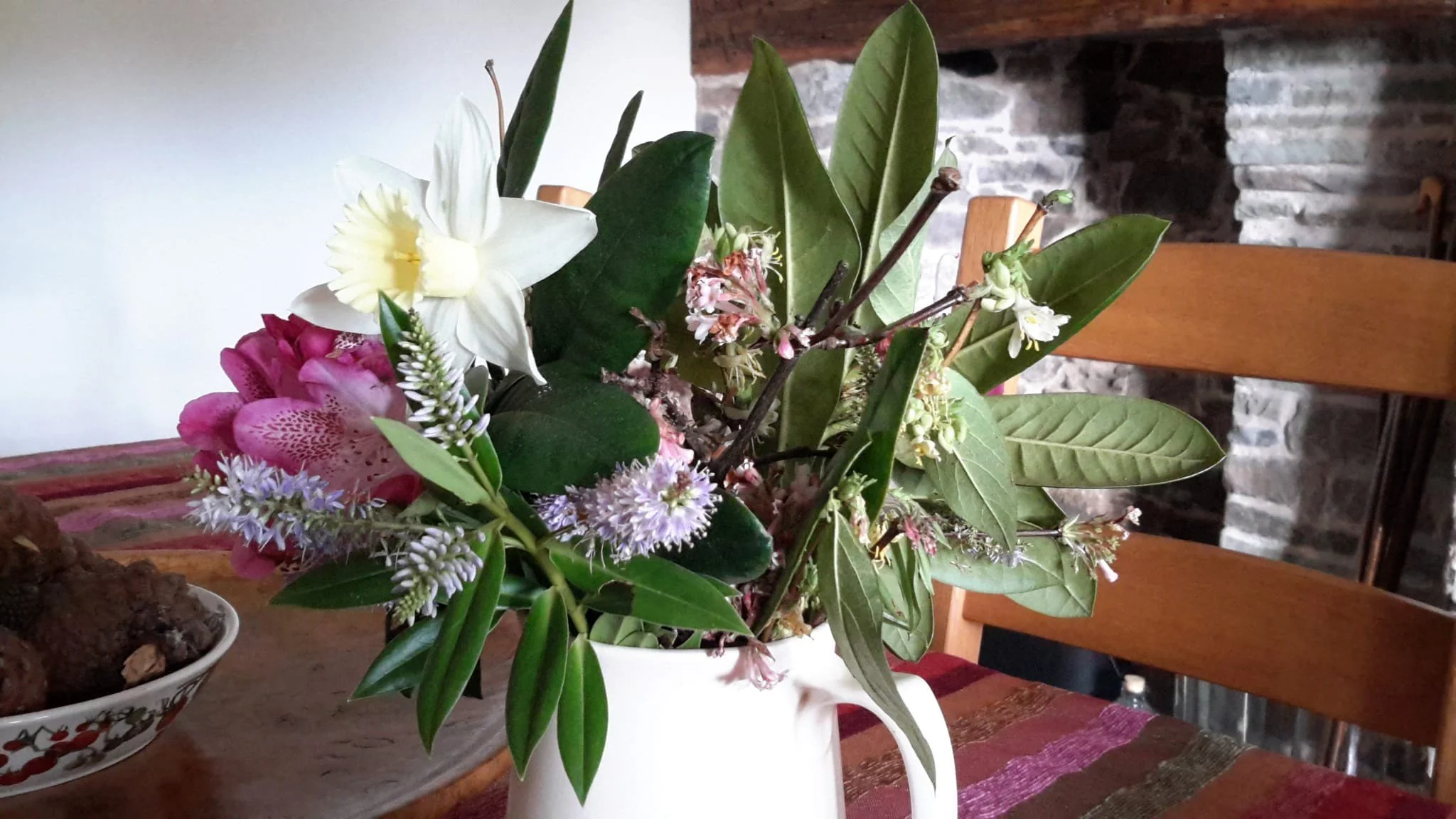
Winter blossoms